If you own a vehicle in Louisiana — or you’re planning to register one — you may be wondering how long license plates are issued and how long they remain valid. This is a common question for drivers who want to stay compliant with state regulations, as well as for those using a Louisiana license plate lookup tool to research vehicle information.
The answer depends on understanding two important factors: the physical lifespan of license plates and the legal validity tied to registration. In Louisiana, license plates are designed for long-term use, but their legal status depends on keeping your registration current. Let’s explore how it all works.
Who Issues License Plates in Louisiana?
License plates in Louisiana are issued and managed by the Louisiana Office of Motor Vehicles (OMV), a division of the Department of Public Safety. This office oversees:
- Vehicle registration and titling
- Plate issuance and transfers
- Renewal processing
- Plate replacements and duplicate orders
When you register a vehicle, the state assigns a license plate that is formally tied to your vehicle record.
Do License Plates Expire in Louisiana?
Here’s the key takeaway: License plates in Louisiana do not typically expire physically — but the registration associated with them must be renewed regularly.
This means:
- Plates can remain in use for many years.
- There is no fixed expiration date for the physical piece of metal.
- Registration status determines whether the plate is legally valid on the road.
If your registration expires, your license plates become invalid — even if they are still attached securely to your vehicle.
Registration Renewal in Louisiana
Unlike states that require annual renewals for all passenger vehicles, Louisiana utilizes a multi-year registration framework for standard automobiles and light trucks.
What does renewal involve?
Every two years, you must renew your passenger vehicle registration. During this process, you will:
- Pay registration and handling fees (based on your vehicle’s sales price or value).
- Confirm your vehicle details and personal information.
- Provide active proof of compulsory liability auto insurance.
- Receive a new registration tab (validation decal).
The decal is placed on your license plate and visually displays the month and year of expiration to law enforcement.
What happens if you don’t renew?
Failing to renew your registration on time can result in:
- Late fees and interest penalties.
- Traffic citations and potential vehicle impoundment.
- Suspension flags placed on your driving profile by the OMV.
Additionally, an expired registration will immediately show up in public datasets. If someone performs a Louisiana license plate lookup search, the plate will appear as inactive.
How Long Do Temporary License Plates Last?
When you purchase a vehicle from a licensed dealership in Louisiana, you will receive a temporary license tag (commonly referred to as a T-marker).
Temporary plates in Louisiana:
- Are valid for 60 days from the date of purchase.
- Allow legal driving while your permanent title and registration are processed by the OMV or a Public Tag Agent.
- Are printed on durable cardboard or weather-resistant paper.
Once your official registration is complete, your permanent metal plate will be issued or transferred.
How Long Do Permanent Plates Last?
Louisiana license plates are built for long-term durability.
Typical lifespan:
- Plates can easily last 10 years or more.
- They feature special reflective coatings to stay visible at night.
- They do not require routine replacement under normal conditions.
Unlike some states that force a complete plate reissue cycle every decade, Louisiana allows you to keep using the same physical plate as long as it remains fully legible and free of severe wear.
When Are New Plates Issued?
Even though plates are highly durable, there are several common situations where a new one is issued:
1. First-Time Registration
You will receive a brand-new metal plate when registering a vehicle in your name for the first time in Louisiana without transferring an existing plate.
2. Plate Damage or Loss
If your plate becomes:
- Lost or stolen
- Damaged, bent, or heavily rusted
- Unreadable from a distance of 100 feet
You must apply for a replacement duplicate plate through the OMV or a Public Tag Agent for a baseline fee.
3. Specialty or Personalized Plates
If you choose to upgrade from the standard “Environmental” or “Centennial” backing to a university, military, or custom vanity plate combination, a new custom plate will be manufactured and issued.
Do Plates Stay With the Vehicle?
In Louisiana, license plates generally stay with the owner, not the vehicle.
When a vehicle is sold or traded:
- The seller is legally required to remove the metal license plate from the car before handing the keys to the buyer.
- The seller can choose to transfer that plate to another vehicle they own (upon paying a small transfer fee).
- If the plate is not being transferred, the seller must cancel the registration online or return the plate directly to the OMV to avoid future insurance flags.
- The buyer must obtain their own completely new plate and registration.
This owner-based system is a vital detail to remember. If you run a Louisiana license plate lookup tool, the plate’s historical profile is tied heavily to the individual registrant’s ownership timeline rather than just the vehicle chassis.
Specialty and Vanity Plates in Louisiana
Louisiana offers hundreds of custom license plate styles, including:
- State university and college logos
- Military veteran branches and honors
- Special causes, environmental protections, and charity designs
These specialty options follow the same legal rules as standard plates: they require ongoing two-year registration renewals, must be backed by valid auto insurance, and remain valid as long as all administrative fees are kept current.
What Happens If Registration Expires?
If your two-year renewal window passes without payment, your plate status immediately shifts.
Possible consequences:
- Fines and Tickets: Driving with an expired plate violates state law and is a common trigger for traffic stops.
- Insurance Flag Blocks: If your vehicle has a lapsed insurance record tied to an expired plate, the OMV can levy heavy civil penalties that freeze your ability to register any future vehicles.
From a public records standpoint, an expired registration will immediately flag the vehicle’s background profile as delinquent or inactive during data checks.
How to Check Louisiana License Plate Status
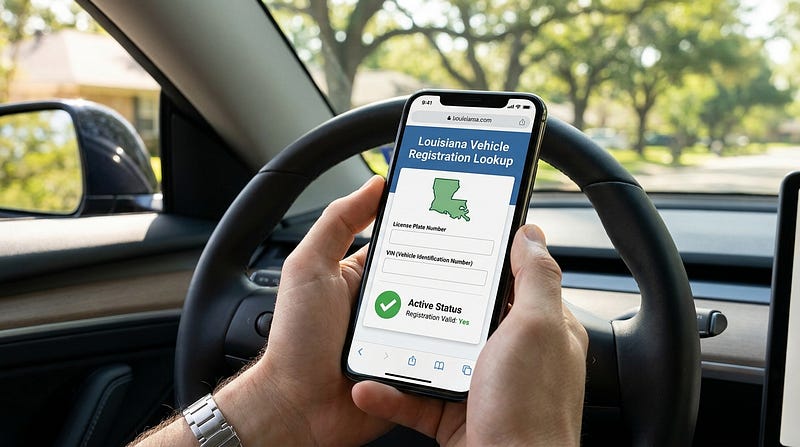
If you want to verify that your own plate is completely clear of OMV flags, or if you are researching a pre-owned vehicle before buying it from a private seller, you can verify the details instantly.
For a fast, comprehensive look at public vehicle history records, you can check here:
???? louisianalicenseplate.com
Using these digital lookups allows you to:
- Confirm the active or inactive registration status of a plate.
- Cross-reference vehicle specifications (make, model, and year) to spot fraud.
- Check for title flags like salvage or flood designations, which are common in the Gulf Coast region.
How Long Do Plates Physically Last?
Louisiana plates are manufactured out of sturdy aluminum designed to withstand high humidity, intense summer heat, and coastal air conditions.
- Average Lifespan: 10 to 15 years.
- Factors Affecting Durability: Constant exposure to intense sunlight, structural damage from minor rear-end accidents, or debris impact from highway driving.
If the reflective coating peels off or the numbers fade, you should proactively replace the plate to avoid visibility citations.
Key Takeaways
Here is a quick summary of how license plate lifespans and validity work in the Pelican State:
- Plates are built for long-term use and do not have an automatic physical expiration date.
- Legal validity requires renewing your vehicle registration every two years.
- Temporary dealership tags are valid for 60 days.
- License plates stay with the owner, meaning you must remove your plate when selling your car.
- Replacement is only required if your plate becomes unreadable, damaged, lost, or stolen.
Final Thoughts
Louisiana’s license plate framework balances physical durability with electronic tracking. While your metal plate can easily last for over a decade without wearing down, its real-world legality is determined completely by your renewal calendar and insurance standing.
For drivers, keeping your registration updated every two years and maintaining continuous auto insurance coverage are your primary responsibilities. Whether you are hitting the highway or verifying a vehicle’s background using a louisiana license plate lookup search, staying informed on these rules ensures you navigate the state’s roads without any unexpected bumps.